Insights from Lusophone Africa: From Feedback to Change – Why Grievance Mechanisms Matter
2026-09-19
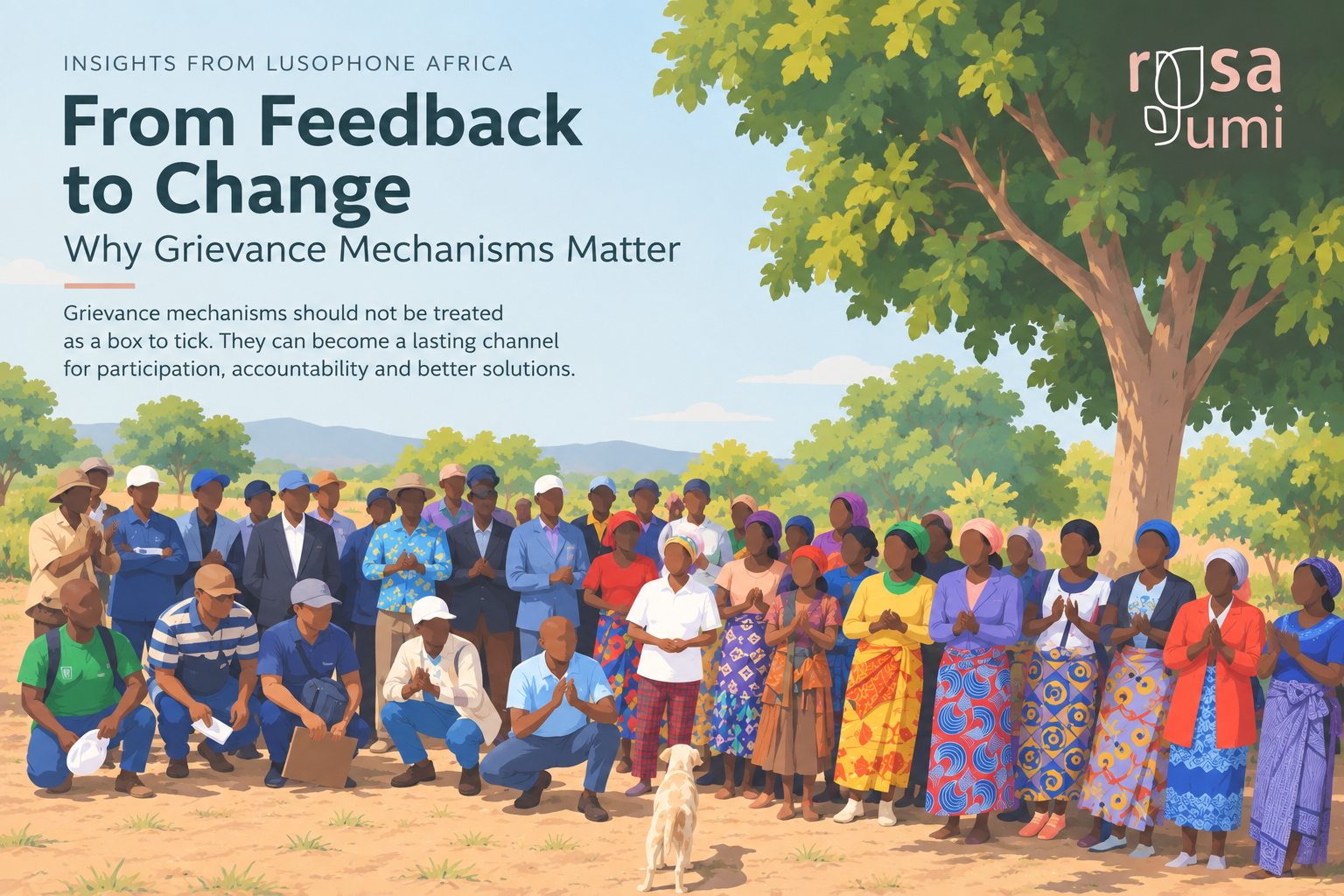
Grievance mechanisms should not be treated as a box to tick. They can become a lasting channel for participation, accountability and better solutions.
In development projects, Grievance Mechanisms (GMs) are increasingly required by international financing institutions such as the World Bank, African Development Bank and French Development Agency (AFD). But their value goes far beyond compliance.
A meaningful GM gives communities and stakeholders an accessible way to raise concerns, provide feedback and contribute to improving a project. The objective is not simply to register complaints, but to ensure that concerns are heard, addressed and followed up.
More than a complaint system
A grievance may reveal a problem with a project’s implementation, but it can also provide valuable knowledge about how an intervention is affecting people's daily lives.
This makes the GM a participatory instrument. When feedback leads to concrete changes, it can strengthen both trust and accountability.
Social and technical teams must work together
Many issues raised through grievance mechanisms cannot be solved by social teams alone. A concern about access to water, for example, may require changes to the location, design, operation or maintenance of infrastructure.
Good solutions require social and technical perspectives to work together.
Social specialists understand communities, vulnerabilities and expectations; technical teams understand what can be adapted in the intervention. Their collaboration can turn feedback into practical and sustainable solutions.
Beyond the project
Projects have an end date. The infrastructure and services they create often do not.
Grievance mechanisms should therefore contribute to longer-term relationships between communities and the institutions responsible for managing these services. Participation should not end when consultation ends.
Ultimately, the question is not only how many complaints were received? but also:
What did we learn, what changed, and how will those solutions continue over time?
A project may have an end date. The relationship with the communities it affects should not.
Tags: SocialSafeguards, GrievanceMechanism, StakeholderEngagement, CommunityEngagement, SocialImpact, DevelopmentProjects, WorldBank, AfricanDevelopmentBank, AFD, SustainableDevelopment, LusophoneAfrica
« Voltar

