Insights from Lusophone Africa: When Stakeholder Engagement Becomes More Than Consultation
2026-09-01
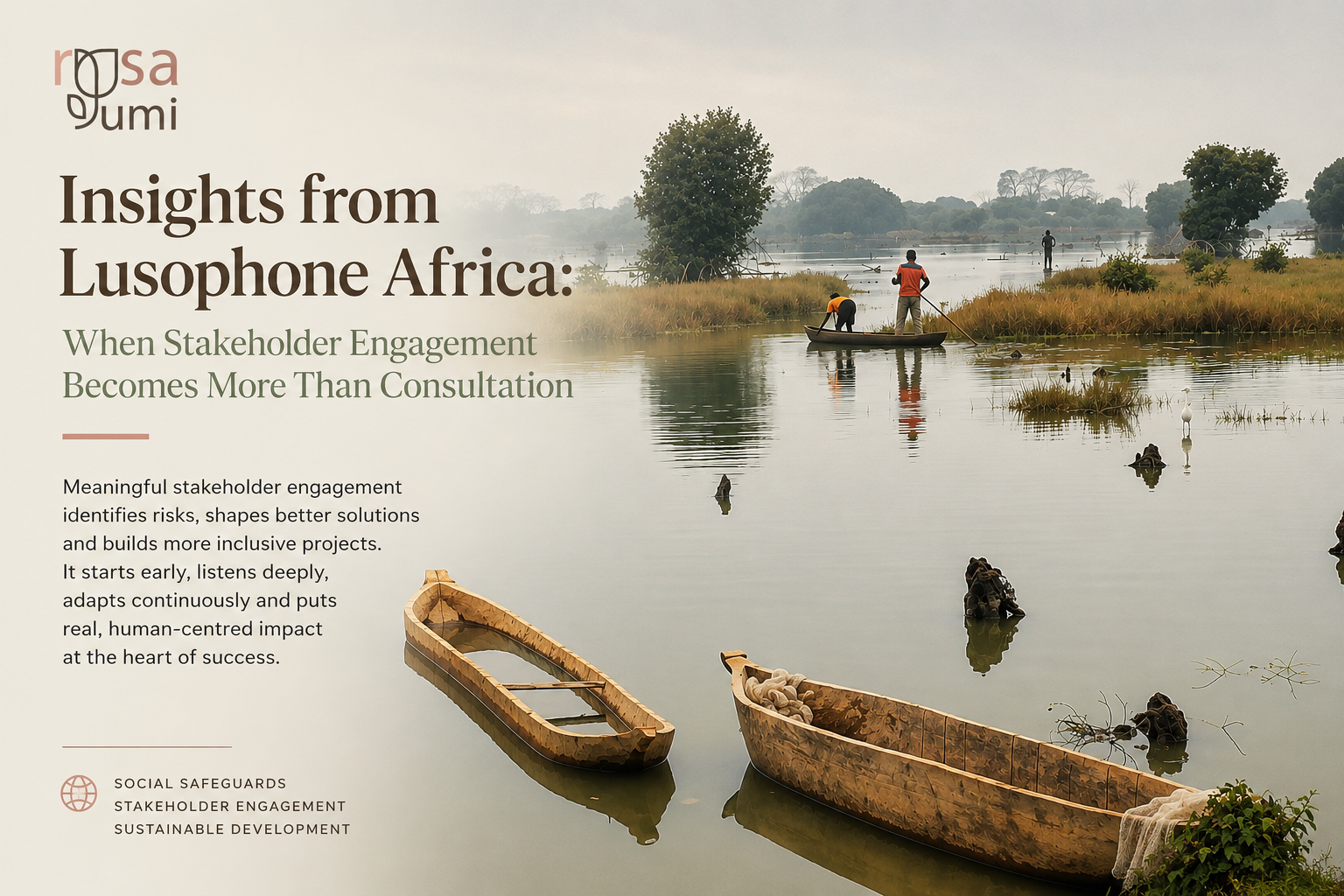
Meaningful stakeholder engagement is not simply about informing communities or collecting opinions. In development projects, it can help identify social risks, understand local priorities, and improve how interventions are designed and implemented. When engagement starts early and continues throughout the project cycle, stakeholders can contribute to solutions rather than being involved only after key decisions have been made.
Effective engagement, particularly in complex projects involving communities, infrastructure, and livelihoods, requires empathy, an understanding of cultural differences, and a conscious avoidance of judgment or paternalism. It also requires multidisciplinary, proactive, and adaptable teams capable of learning from the field and adjusting their approaches to local realities. In this sense, community interaction becomes a continuous exchange of knowledge rather than a one-way transfer.
Ultimately, stakeholder engagement should be more than a safeguard requirement. It is an essential part of building more inclusive, resilient, and sustainable projects. Even when social change is not immediately visible, keeping real, human-centred social impact at the heart of an intervention remains one of the clearest measures of its success.
Tags: StakeholderEngagement, SocialSafeguards, SocialImpact, InternationalDevelopment, LusophoneAfrica, CommunityEngagement, SustainableDevelopment, EmpathyInDevelopment
« Voltar

